When Outlook and Teams go down, how quickly can your business recover?
· NDC Certification Bureau
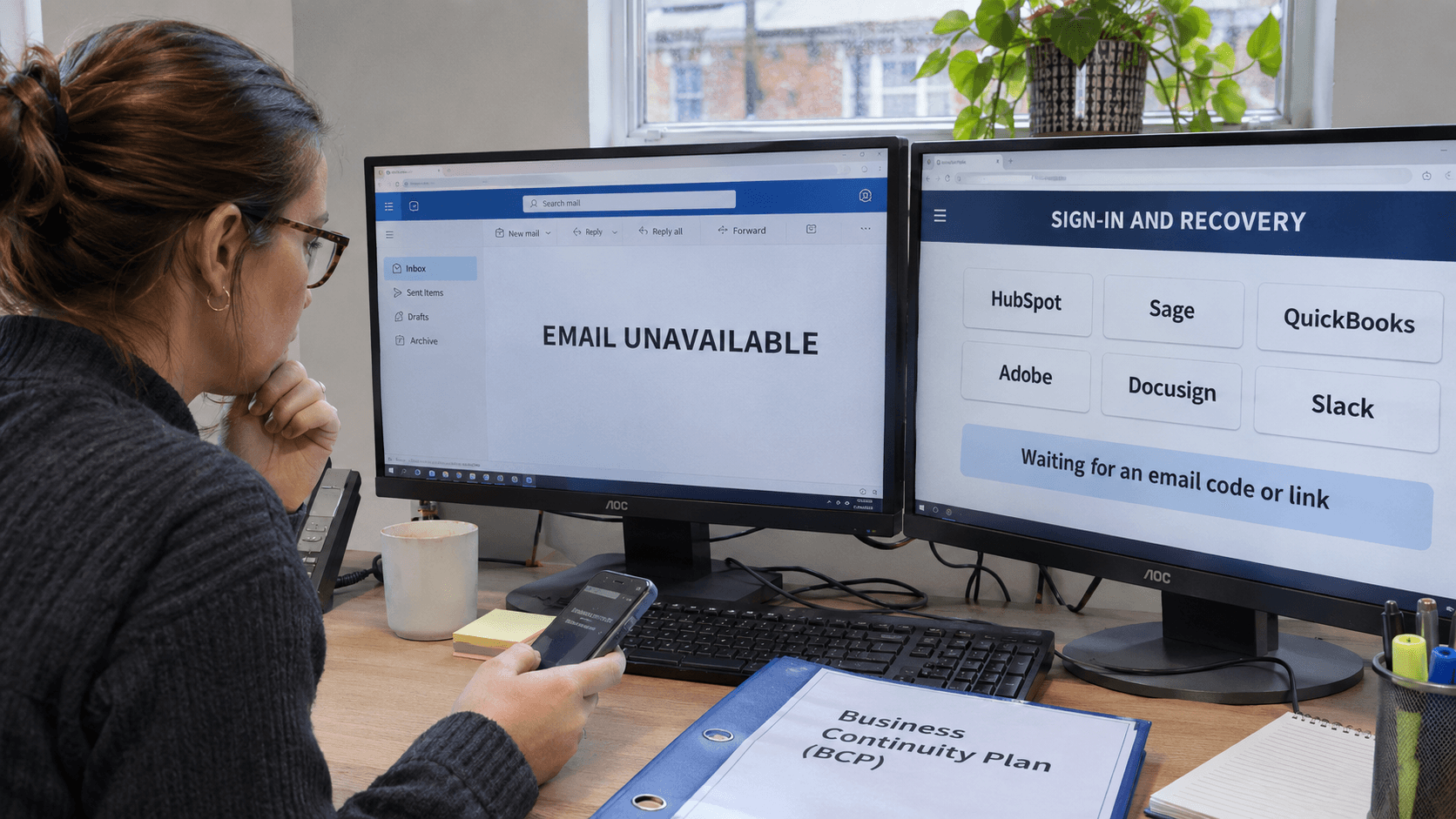
Imagine your team has an audit, a delivery or a customer deadline tomorrow morning. Outlook and Teams are down. The latest schedule is in your calendar and the phone number you need is in an email. Who makes the first call, and where do they find the number?
The Microsoft 365 outage on 12–13 November disrupted Outlook and Teams. Microsoft attributed the incident to server issues. Similar disruptions will happen again. A supplier outage, loss of connectivity or cyberattack can each leave staff without the tools they usually rely on. A business continuity plan (BCP) gives them a way to reach people, keep essential work moving and recover within a timeframe the business can tolerate. Reuters coverage of the Microsoft 365 outage
Three steps any business can use to stay in touch
Step 1. Microsoft 365 and email go down
When Outlook and Teams become unavailable, the person leading the response confirms the disruption, opens the quick-reference page and briefs staff by phone or text. Start with customers who have a delivery, appointment or deadline at risk. Tell them what to expect and when they’ll hear from you again.
Step 2. Switch to a Gmail account set up in advance
Prepare a dedicated Gmail or Google Workspace account that staff can access independently of Microsoft 365. Load a current copy of your client contacts and the essential customer information your team needs to answer queries and keep commitments. Give authorised staff a way to sign in and recover access without relying on the Outlook inbox.
Before you need the account, test sending and receiving messages with an external address and tell staff how customers can recognise an official update. If delivery is still being verified, use calls or texts for urgent messages.
Step 3. Open the printed playbook and use Royal Mail if needed
If the internet or backup email is unavailable, an authorised colleague should be able to open the printed playbook and find what they need to keep working. Include:
- A complete customer and business contact directory with names, email addresses, office and postal addresses, and office and mobile numbers. Include essential staff numbers and the main and alternate contacts for each client.
- A summary of what each customer bought, the services they receive and any open orders, appointments or upcoming commitments. This helps the team decide who needs a call first and what to tell them.
- A list of the software the business relies on, including sign-in addresses, account references, who manages each system and how to reach supplier support. Keep passwords and recovery codes in an approved secure vault.
- Pre-printed client letters ready to send via Royal Mail, with envelopes and an up-to-date mailing list. Include a number customers can call and a space to add the date and any incident-specific details. Use phone or SMS for urgent updates when those channels are available.
Keep the hard copy somewhere authorised staff can reach during an outage. Give someone responsibility for keeping it current when staff, clients, orders or software change.
Rehearse the first 24 hours
Ask your team to rehearse how they would respond over the first 24 hours if Microsoft 365 went down and the backup account later became unavailable. Time how long it takes to brief staff, find a customer’s purchase history and mobile number, send a test update from Gmail, and get a letter ready to post. Record who owns each fix and when you’ll retest it. The UK National Cyber Security Centre also offers scenarios for rehearsing a cyber incident. NCSC tabletop exercises
Test your business continuity plan with NDC
We can help you run a scenario based on the systems and services your business depends on. Together we’ll test how your team activates the plan, reaches staff and customers, and resumes essential work. You’ll come away with a list of what to fix and retest.
Contact NDC Certification Bureau to discuss a business continuity exercise or learn more about ISO 22301 business continuity management.